Lusaka Profile

Kenneth Kaunda International Airport (KKIA), better known as Lusaka Airport, in facts, map and passenger information with a virtual video landing at Lusaka Airport. Originally known simply as Lusaka International Airport and opened in 1967, its foundations were laid to serve the then-emerging nation of Zambia. For decades, it served as the primary aerial gateway, witnessing countless arrivals and departures that shaped the country's economic and social landscape. The airport played a crucial role during challenging times, facilitating humanitarian aid and maintaining essential links when other forms of transport were less viable. Its initial design and capacity, while adequate for its time, eventually began to show the strains of increasing demand as Zambia's economy expanded and air travel became more accessible.

In 2017, as a tribute to Zambia's first President, Dr Kenneth David Kaunda, who served from 1964 to 1991, Lusaka airport was renamed in his honour to Kenneth Kaunda International Airport. This renaming coincided with ambitious plans for a massive upgrade and expansion project aimed at transforming the airport into a truly world-class aviation hub. The realisation of this vision culminated in the unveiling of a brand-new, ultra-modern terminal, marking a significant milestone in Zambia's infrastructure development and significantly enhancing its global standing. This transformation was not merely cosmetic; it fundamentally reimagined the passenger experience and operational efficiency, setting the stage for a new era of air travel in Zambia.

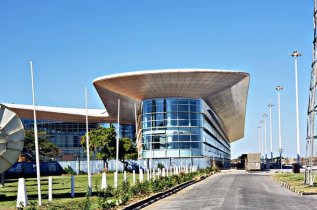
Named as the Best Airport in Africa at the World Luxury Travel Awards in 2022, for many, the new Kenneth Kaunda International Airport represents contemporary airport design and functionality with a significantly increased capacity and operational capabilities. The new terminal, opened in 2021, designed and built by the Chinese Jiangxi International company, has increased capacity with a new two-story terminal building, 22 check-in counters, 12 border channels and six security check counters; a presidential terminal, a new air traffic control building and tower and a new hotel. Unlike many other African airports, passengers report that the staff are polite and friendly, and there's no need to 'share' money to facilitate the visa processes.

Lusaka Airport has a diverse selection of retail outlets for duty-free shopping, including local crafts, international brands, and travel essentials. There are also several restaurants, cafes, and snack bars catering to different tastes and preferences, from quick bites to more relaxed dining experiences. For business travellers, the airport features modern executive lounges, providing comfortable seating, Wi-Fi connectivity, business facilities, and complimentary refreshments. The new terminal also prioritises accessibility, with facilities designed to accommodate passengers with reduced mobility. Furthermore, the airport has significantly expanded its car parking facilities, offering both short-term and long-term options, along with improved access roads to ensure efficient traffic flow, with Lusaka itself located a 47-minute (25.4 km) drive away via Airport Rd and Great East Road. A dedicated cargo terminal also underscores KKIA's importance not just for passenger movement, but for trade and logistics, facilitating the import and export of goods crucial to Zambia's economy.


Lusaka Airport

Lusaka Airport

Lusaka Airport

Lusaka Airport


Volunteer in Zambia

African Volunteer Work: Zambia

Check out all the latest fee paying and free volunteer work placements with local projects in Zambia.
More >


Lusaka Airport

Kenneth Kaunda International Airport

Kenneth Kaunda International Airport connects Lusaka to a wide array of regional and international destinations. The airport's strategic location in Southern Africa makes it an attractive hub for numerous international and regional airlines, including Emirates, offering direct connections to Dubai, a major global hub that in turn provides access to hundreds of destinations worldwide. Qatar Airways similarly connects Lusaka to Doha, another vital gateway to Europe, Asia, and the Americas. Ethiopian Airlines maintains a strong presence, linking Lusaka to Addis Ababa, which serves as a crucial pan-African and international transit point. Turkish Airlines extends its network to Istanbul, opening up direct routes to Europe and beyond. Kenya Airways provides essential connectivity to Nairobi, fostering regional trade and tourism within East Africa.

Regionally, KKIA is well-served by carriers such as South African Airways and Airlink, linking Lusaka to Johannesburg, one of Africa's busiest airports and a gateway to the broader Southern African region. Domestically, Proflight Zambia is a key operator, offering vital connections to various Zambian cities and popular tourist destinations, including Livingstone (Victoria Falls), Mfuwe (South Luangwa National Park), and Ndola. As such, the airport is a significant contributor to Zambia's tourist economy. Before the global disruption caused by the pandemic, the airport was consistently handling over a million passengers annually, a figure that underscored its crucial role as the nation's primary international gateway.

With the advent of the new terminal, the airport's capacity has soared, designed to handle up to four million passengers per annum comfortably. This significant increase in capacity allows for projected growth well into the future, ensuring that the airport can meet the demands of an expanding tourism sector and increased business travel. Post-pandemic recovery has seen a strong resurgence in air travel at KKIA, with passenger volumes steadily climbing back towards and in some instances surpassing pre-2020 levels. This rebound is a clear indicator of the airport's resilience and its fundamental importance. The enhanced facilities, coupled with the expanding network of airlines and destinations, are expected to further stimulate passenger growth. This growth is not just about numbers; it translates into tangible economic benefits for Zambia, facilitating foreign direct investment, boosting the tourism industry, and fostering international trade, thereby creating employment opportunities and contributing significantly to the national GDP.

Now make a virtual landing at Lusaka's Kenneth Kaunda International Airport in the video (above, right), then explore Lusaa itself using the links above.


Volunteer
by Country

African Volunteer Work


Sponsor
a Child

Sponsor a Child in Africa


All About
Africa

About Africa


African
Resources

African Resources