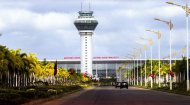
Luanda Airport

Luanda Quatro de Fevereiro International Airport (LAD), better known as Luanda Airport, in facts, map and passenger information with a virtual video landing at Luanda Airport. Its establishment dates back to the colonial era when it was known as Aeroporto de Luanda, and later Luanda-Portela in the mid-20th century. However, following the nation's independence in 1975, the airport was renamed to commemorate the pivotal date of February 4, 1961 the day when nationalist fighters launched a series of coordinated attacks that are widely considered the beginning of the Angolan War of Independence. Today, the airport is being replaced by Dr António Agostinho Neto International Airport (see below) but will remain open for non-commercial air services, maintenance, and training after that transiion is completed.

As the current operational centre for Angola’s flag carrier, TAAG Angola Airlines, Quatro de Fevereiro plays a vital role in connecting the nation. TAAG utilises LAD as its primary hub, operating crucial domestic flights that link Luanda to provincial centres like Cabinda, Lubango, and Benguela, which are often difficult to reach by land transport. Beyond domestic travel, LAD functions as a key nexus for inter-African travel and long-haul international routes. The operating airlines at LAD reflect the strategic importance of Luanda’s economy, particularly its strong ties to the oil and gas industry. Major global carriers routinely service the airport, including TAP Air Portugal, Lufthansa, Air France, Emirates, Ethiopian Airlines, and South African Airways.

The diverse range of destinations served from Luanda Airport highlights its global connectivity. Lisbon (Portugal) remains arguably the most critical international route, reflecting historical and economic ties. Other significant long-haul routes include Frankfurt, Dubai, and Paris. Regionally, key destinations involve major African metropolitan areas central to trade and diplomatic relations, such as Johannesburg, Kinshasa, and Addis Ababa.

Prior to periods of global disruption, Luanda Airport normally handled between 3 and 4 million passengers annually, solidifying its position among the top 20 busiest airports in Africa. However, these figures are highly sensitive to Angola's economic climate, which is heavily reliant on oil prices. During periods of growth, the passenger throughput strains the terminal facilities, which were not originally built to accommodate such high volumes under modern security standards.

Moreover, Quatro de Fevereiro is a major bottleneck for cargo, processing millions of tons of essential imports and exports, often reflecting the logistical complexity of supplying a rapidly developing nation where air freight is frequently preferred for high-value or time-sensitive goods. The consistent volume of passengers and freight underscored the necessity for infrastructural expansion and modernisation projects, leading to the commissioning and now opening of the new Dr António Agostinho Neto International Airport in 2024, approximately 40 kilometres (25 miles) away by road.


Luanda Airport

Luanda Airport

Luanda Airport

Luanda Airport


Volunteer in Angola

African Volunteer Work: Angola

Check out all the latest fee paying and free African volunteer work placements in Angola.
More >


Inside Luanda Airport

Luanda Quatro de Fevereiro International Airport

Despite its operational intensity, the existing facilities at Quatro de Fevereiro International Airport are functional, though increasingly dated in comparison to newer global terminals. The airport primarily comprises a main passenger terminal designed to handle both domestic and international traffic. While improvements have been made over the years - including upgrades to check-in areas, security screening points, and baggage handling systems - the cramped conditions during peak hours are noticeable. Passenger amenities include a limited selection of retail duty-free shops, restaurants, and cafes. For premium travellers, the airport offers several executive lounges, notably the TAAG-branded lounge, providing necessary comfort during layovers. However, one of the facility’s key limitations is apron space and gate capacity, often resulting in remote stand usage requiring bus transfers, which adds complexity and time to the passenger experience.

The heavy constraints faced by the current airport, primarily due to its inner-city location, preventing significant expansion, have necessitated a long-term strategic shift. This new facility is designed to handle significantly higher traffic volumes (up to 15 million passengers annually) and provide state-of-the-art logistics capabilities. Yet, until AIA is fully operational — a transition likely to take several years - Quatro de Fevereiro remains Angola's air transport lifeline and is currently navigating a balance of maintaining critical operations while awaiting the transfer of its historical legacy to its successor.

Passengers report that it is useful to have some spare $$$ to help 'facilitate' the checking in and out process and advise that it's prudent to take food and water with you as the in-airport facilities are rarely operational. The airport has been the centre of a mystery dating back to 25th May 2003, when a Boeing 727 formerly owned by American Airlines was stolen from the airport, having been parked there for a year. It says something for airport security that such an aeroplane can be stolen and never recovered! Now make a virtual landing at Luanda airport in the video above, explore Luanda or check out the new Dr António Agostinho Neto International Airport using the links above.

In the meantime, check out our article about Quatro de Fevereiro Airport above.


Volunteer
by Country

African Volunteer Work


Sponsor
a Child

Sponsor a Child in Africa


All About
Africa

About Africa


African
Resources

African Resources