Ivory Coast NewsExplore the latest Ivory Coast news and current events, the current state of press freedom in the Ivory Coast (Côte d'Ivoire), including government influence, legal threats, and the role of independent media. The main Ivory Coast news headlines are below however you can also read news from each African country by using the drop-down menu. |
Ivory Coast News |
Ivory Coast News |
Ivory Coast News | Ivory Coast News |


For information, videos and photos of the Ivory Coast check out our Côte d'Ivoire profile pages.
More >
|
|
|
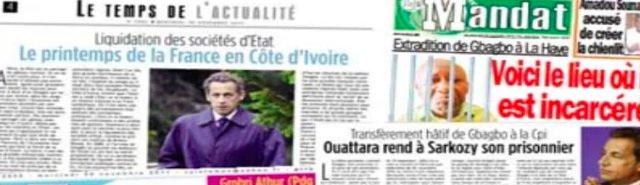
The media landscape in Ivory Coast is characterised by a diversity of outlets set against persistent governmental constraints on genuine press freedoms.The Ivorian media features numerous daily private newspapers and radio stations that often adopt fiercely partisan stances, contrasting sharply with the more guarded coverage offered by state-owned entities such as the national broadcaster, RTI, or the daily newspaper Fraternité Matin. While the country’s constitution and various laws enshrine guarantees for freedom of the press and expression, the practical reality for journalists frequently falls short of these ideals, creating a significant gap between legal protection and operational safety. This environment of theoretical freedom often masks the routine pressures exerted on journalists, particularly those working for outlets critical of the administration, like the popular tabloid Soir Info or certain online news sites. Instances of subtle, as well as overt, harassment and intimidation remain a major concern. Although outright media shutdowns are less common than in some neighbouring states, the threat of legal repercussions, particularly the use of stringent defamation laws applied via the National Press Authority (ANP), serves as a pervasive mechanism of control. Journalists investigating corruption or political dissent frequently face judicial sanctions, arrests, or prolonged detentions, effectively chilling independent reporting and pushing many journalists toward self-censorship to avoid administrative penalties or prolonged legal battles. The mechanisms of control have evolved significantly in the digital age. Contemporary challenges to press independence in Ivory Coast increasingly involve governmental control over the online space. While internet blackouts are generally rare, the government has focused on regulating social media and digital publications. Digital surveillance infrastructure acquired by the state raises serious concerns among independent investigative reporters about the privacy of their sources and their ability to operate securely. Regulations ostensibly designed to combat 'fake news' are sometimes viewed by critics as convenient tools to justify the monitoring or penalisation of dissenting voices on platforms where traditional governmental control is harder to enforce, thereby extending the government’s reach beyond the conventional print and broadcast media. The distinction between state-owned and privately owned outlets remains crucial in understanding the flow of information. State media often functions as a mouthpiece for official policy and messaging, while the private press, though often reflecting opposition views, remains the primary source for critical analysis and counter-narratives. This polarisation, however, can sometimes lead to inflammatory reporting, which the government then cites as justification for interventions against "irresponsible journalism." Compared to the overall West African region, Ivory Coast generally maintains a reputation for having a more diverse, if aggressively partisan, press than authoritarian neighbours, yet it clearly lags behind countries with stronger democratic institutions in terms of providing practical, unhindered protection for reporters and editors. Ultimately, the future of press freedom in the country hinges on whether the robust constitutional provisions currently on paper can be consistently upheld over governmental interests in controlling the narrative |


