Cameroon NewsExplore the latest Cameroon news and current events, the current state of press freedom in Cameroon, including government influence, legal threats, and the role of independent media. The main Cameroon news headlines are below however you can also read news from each African country by using the drop-down menu. |
Cameroon News |
Cameroon News |
Cameroon News | Cameroon News |



For information, videos and photos about the African nation of Cameroon, check out our profile pages.
More >
|
|
|
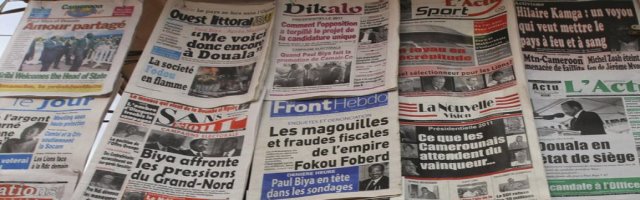
The media landscape in Cameroon presents a complex and often challenging environment for journalists striving to uphold press freedoms. Despite the constitutional guarantees of freedom of expression, journalists frequently navigate a precarious path, where the promise of a free press is often ignored in practice, giving way to an atmosphere of apprehension. Instances of censorship, arrests, media shutdowns, and harassment of journalists are unfortunately not uncommon. Reporters and editors often face legal actions, sometimes on vaguely defined charges such as "insulting the head of state" or "spreading false news," which can result in lengthy detentions. News outlets have seen their operations suspended for perceived infractions, and journalists have experienced physical intimidation or arbitrary arrests, creating a chilling effect that encourages self-censorship. This environment is further complicated by governments' increasingly sophisticated use of digital tools to control the narrative. Digital surveillance is a growing concern, and social media regulations are often weaponised to silence critical voices online. While freedom of the press is explicitly enshrined in Cameroonian law, the real-world application often deviates starkly from these legal protections. This discrepancy is a constant point of concern for international press freedom organisations and local media watchdogs alike. A key aspect of Cameroon’s media ecosystem is the distinct role played by state-owned media versus privately owned outlets. State broadcasters like CRTV (Cameroon Radio Television) predominantly reflect government perspectives and policies, serving as a platform for official communication. In contrast, privately owned outlets, such as Equinoxe TV, Canal 2 International, or newspapers like Le Messager and The Post, often strive to offer alternative viewpoints and critical analyses. However, these private entities frequently bear the brunt of official pressure and regulatory scrutiny, facing stricter licensing requirements, economic disadvantages, and a higher risk of punitive measures for perceived transgressions. This dynamic creates an uneven playing field, where the pursuit of independent journalism is an act of sustained courage and resilience against significant odds. |


