Addis Ababa Airport

Addis Ababa Bole International Airport, better known as Addis Ababa or Bole Airport, in facts, map and passenger information with a virtual video landing at Addis Ababa. Prior to its current iteration, air travel in the capital was primarily handled by the older Lidetta Airport which was constructed by the Italians during their occupation of Ethiopia from 1936 to 1941.

However, as independent Ethiopia began to recognise the strategic importance of air travel for political and economic integration both regionally and globally, a new, more expansive facility was required. The transition to the Bole site, located southeast of the city centre, marked the beginning of a pursuit for modernisation. The foundational stones of the current iteration were laid decades ago, but the true transformation arrived in the early 21st century.

The first major phase of expansion, completed around 2003, significantly boosted its capacity, providing a modern terminal, an upgraded runway system designed to handle large wide-body aircraft, and facilities capable of managing the surge in transit traffic that Ethiopian Airlines was already beginning to cultivate. This investment solidified Bole's role, shifting it from a regional airport serving a national carrier to an emerging colossal continental hub. Subsequent phases of expansion, particularly the multi-billion-dollar project completed in recent years, have further cemented this history of growth, ensuring the airport’s physical structure kept pace with the almost unprecedented growth trajectory of its chief tenant.

Many airlines operate from the airport, including Lufthansa, Emirates, Qatar Airways, Turkish Airlines, and flydubai, however at its core is Ethiopian Airlines with its fleet of 144 aircraft in its operating fleet, with 3 more planned or on order, including 29 Boeing 787s, 22 Boeing 777s, and 23 Airbus A350s, as of early 2024. These planes provide a service to over 130 international passenger and cargo destinations. Ethiopian Airlines’ strategy is built on the premise of connecting Africa to the world, meaning Bole often handles a massive volume of transit passengers who never officially enter Ethiopia but rely on the efficiency of the connection process. This strategic routing allows travellers to fly direct between points such as Washington D.C. or São Paulo and cities deep within West or Southern Africa, making the layover at ADD indispensable. The scale of destinations served directly from Bole - from Beijing, Seoul, and Bangkok in Asia, to Toronto and Newark in North America, alongside dozens of unique African cities like Kinshasa, Lusaka, and Abidjan - demonstrates why the airport is often referred to as the true "Crossroads of Africa," offering unparalleled connectivity that few other African hubs can match.

In terms of numbers, Addis Ababa Bole International consistently manages well over 10 million passengers annually with around 450 arrivals and departures every day. This places it among the busiest airports in Africa, competing directly with major South African and Northern African hubs, and in terms of continental connections. The challenge of accommodating this number of travellers, particularly transit passengers often switching between long-haul flights, has led to a recent large-scale terminal expansion, directly aimed at raising the airport’s annual capacity significantly, ensuring that the infrastructure could reliably and comfortably handle projected figures expected to push towards 20 million passengers in the near future, solidifying its position as a megahub capable of regional dominance.


Addis Ababa Airport

Addis Ababa Airport

Addis Ababa Airport

Addis Ababa Airport


Volunteer in Ethiopia

African Volunteer Work: Ethiopia

Check out all the latest fee paying and free volunteer work placements with local projects in Ethiopia.
More >


Inside Addis Ababa Airport
Addis Ababa Bole Airport

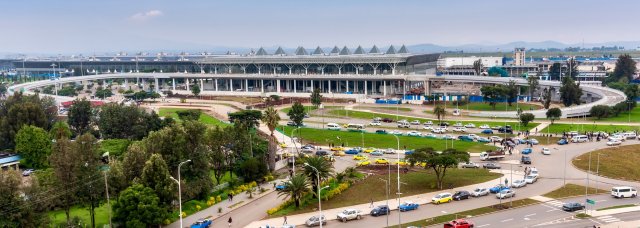
Today Addis Ababa Bole International Airport is characterised by its strikingly modern, expanded Terminal 2, which primarily handles international flights and utilises a sleek glass and steel architectural design (above). The facilities within the terminal are designed with the modern transit traveller in mind, with expansive, open reception and check-in halls, together with improved efficiency in security and immigration processing. For those spending hours between flights, the airport offers duty-free retail zones, which have been significantly upgraded to provide a diverse selection of local goods, international luxury brands, and essential travel items. The airport has improved its Wi-Fi access and provides numerous charging stations throughout the holding areas.

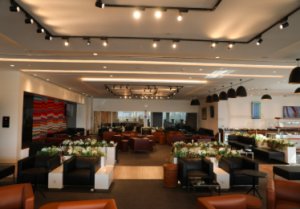
Crucially, the traveller experience at Addis Ababa Airport is greatly enhanced by the premium facilities, especially the extensive lounge offerings provided by Ethiopian Airlines for its business, first-class, and Star Alliance gold members. The Cloud Nine and ShebaMiles lounges are renowned for their spaciousness, impressive catering options reflecting local and international cuisine, and necessary amenities like sleeping rooms and shower facilities, recognising the lengthy nature of many of the long-haul connections. Beyond the main terminals, specialised cargo facilities also underline the airport’s importance. Bole is one of the continent's largest air cargo hubs, equipped with state-of-the-art cold storage facilities vital for handling Ethiopia's massive fresh produce exports, particularly flowers, and for acting as a crucial logistics point for the movement of high-value goods and pharmaceuticals across the African continent. This dual focus on passenger and cargo excellence demonstrates an integrated approach to aviation infrastructure that underpins Ethiopia's national economic strategy.

Just a word of warning to visitors using the airport. While the new terminal has an impressive array of retail outlets, users report that it is very expensive compared with other airports, and there are surcharges on the use of credit cards. Some users have reported that monies have been confiscated on leaving Ethiopia as 'the money 'belongs to the country, while others have commented, "Bole is far away from the international standard". Others have noted security is very tight and sometimes the checks can take a number of hours, "sometimes with hundreds of people in rows in a room with a ceiling height of about 2.20 m. The worst thing I've experienced in a long time." These procedures probably reflect the fact that Addis Ababa Airport has a strong emphasis on bio security and bio safety measures. After you've made a virtual landing at Addis Ababa airport in the video (above, left), why not check out our Ethiopia profile pages?


Volunteer
by Country

African Volunteer Work


Sponsor
a Child

Sponsor a Child in Africa


All About
Africa

About Africa


African
Resources

African Resources