Western Sahara NewsExplore the latest Western Sahara news and current events, the current state of press freedom in the Western Sahara territory, including government influence, legal threats, and the role of independent media. The main Western Sahara news headlines are below however you can also read news from each African country by using the drop-down menu. |
Western Sahara News |
Western Sahara News |
Western Sahara News | Western Sahara News |
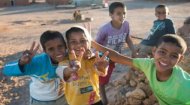

For information, videos and photos of
the west African territory of Western Sahara, check out our profile pages.
More >
|
|
|
The news media landscape in the Western Sahara territory is perhaps one of the most closed and tightly controlled in North Africa, deeply reflective of the unresolved political status of the region, with a sharp disparity between the narrative projected by the governing authorities and the lived experience of journalists, particularly those attempting to report independently from the Moroccan-administered areas. For local Sahrawi journalists and activists, attempts to disseminate information outside the officially sanctioned Moroccan narrative often lead to immediate and severe repercussions. Specific cases of censorship and harassment are numerous, ranging from brief detentions and equipment confiscation to sustained physical harassment and lengthy arrests. Independent reporters, who increasingly rely on digital platforms to bypass traditional checks, are constantly monitoring for government interference. The authorities frequently employ digital surveillance techniques to track communication and movements, and in high-tension moments, there are reports of targeted internet blackouts or throttling of social media platforms, effectively isolating the area and preventing immediate documentation of events. Moroccan state media, such as the national television and radio network, dominate the airwaves in cities like Laayoune and Dakhla. Their coverage frames the territory as Morocco’s "Southern Provinces," consistently emphasising national unity and development while downplaying or ignoring pro-independence sentiment and related protests. Conversely, privately owned or independent Sahrawi outlets are virtually non-existent on the ground; instead, reporting is conducted primarily by citizen journalists, often affiliated with groups like the Sahrawi Centre for Media and Communication, whose reports are generally disseminated via international diaspora networks. These local activists face intense scrutiny, acting as the primary targets for censorship and intimidation campaigns. International journalists attempting to gain access to the Western Sahara often face immediate challenges, including refusal of entry or swift expulsion after arrival, with the Western Sahara operating under a near-total information blockade regarding certain sensitive topics. This restrictive climate confirms that the primary function of media control in the territory is not merely editorial oversight, but a strategic effort to dictate the terms of the political debate and control international perception of the long-standing dispute. |


