Mali NewsExplore the latest Mali news and current events, the current state of press freedom in Mali, including government influence, legal threats, and the role of independent media. The main Malian news headlines are below however you can also read news from each African country by using the drop-down menu. |
Mali News |
Mali News |
Mali News | Mali News |




For information, videos and photos of the West African country of Mali, check out our Mali pages.
More >
|
|
|
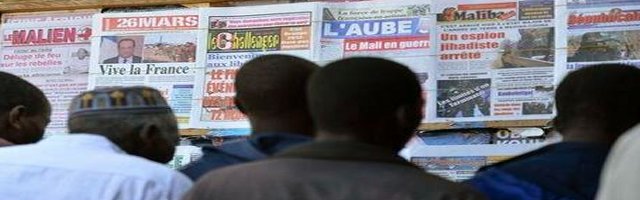
Mali’s media landscape is very much a balance between a diverse private sector, dominated largely by highly influential radio stations that reach deep into the rural population, against the presence of the state-owned broadcaster, ORTM. However, since the military transition of power, this delicate balance has been severely disrupted. What was once recognised as a relatively open, if imperfect, media environment has quickly deteriorated into one characterised by stringent control with a steep decline in press freedoms, making the daily work of journalists increasingly perilous. Freedom of the press and expression remains theoretically enshrined in Malian law, yet, in practice, these legal guarantees are frequently and openly ignored when reporting clashes with the transitional authority's narrative. Journalists operating in Mali face daily threats of arbitrary detention, administrative harassment, and outright censorship, particularly concerning sensitive topics like governance, human rights abuses, and the activities of foreign military partners. Reporting on the ongoing security crises, a critical issue for the Malian populace, has become a high-risk endeavour, often leading to swift governmental reprisals. Specific, high-profile cases illustrate the severity of this governmental pressure. The expulsion and shutdown of prominent international news outlets like Radio France Internationale (RFI) and France 24 in 2022 signalled a clear policy shift toward isolating the media space from critical foreign scrutiny. Domestically, authorities have routinely arrested and detained journalists, often on vague national security charges, or temporarily suspended critical privately-owned outlets. Furthermore, digital controls have become a preferred tool for managing dissent. While wide-scale internet blackouts are less common than in some neighbouring regimes, targeted network throttling, the blocking of certain social media platforms, or the monitoring of digital communications serve as potent forms of digital surveillance used to control the flow of information, effectively punishing reporting that challenges official statements. When comparing Mali to stable democracies in the sub-region, such as Ghana or Senegal, which typically maintain stronger positions on various press freedom indices, the severity of Mali’s regression becomes starkly evident. Where private media in those nations can publish critical analysis with only modest fear of retribution, Malian journalists must constantly navigate a minefield of potential legal and physical risks. |


